

At COMPUTEX 2026, Synology unveiled updates across its storage, data protection, collaboration, surveillance, and private cloud portfolios. The announcements centered on AI integration, hybrid cloud management, and expanded data governance capabilities for both enterprise and consumer environments. Synology also unveiled ActiveProtect Manager 2.0.
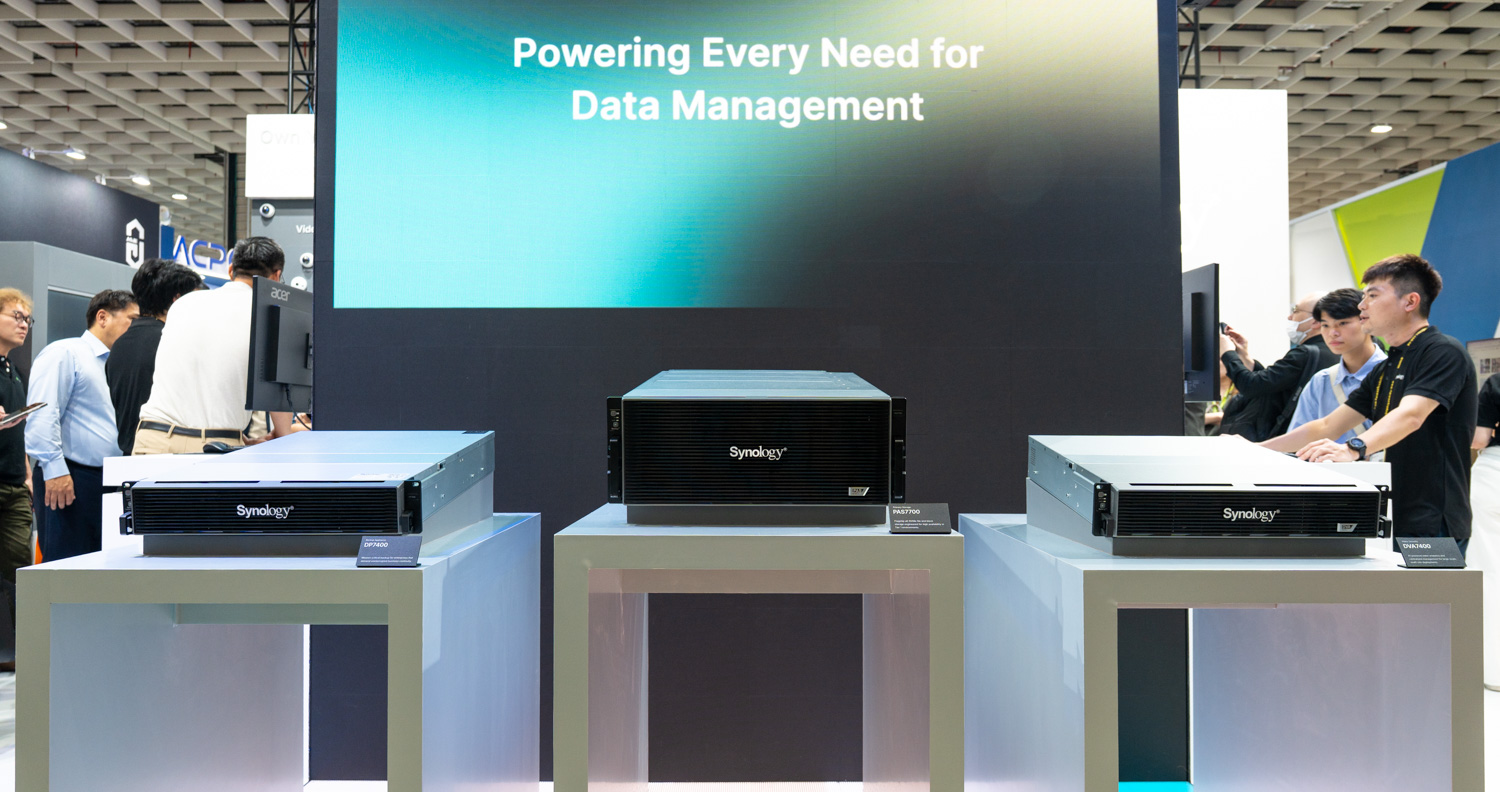
Synology executives emphasized the company’s focus on data ownership, security, and privacy, positioning its platforms as infrastructure that gives organizations and individuals greater control over their data while enabling the adoption of AI-driven technologies. What’s clear now more than ever is how Synology continues to push the brand into the enterprise space with a cohesive message across multiple product lines and offerings.
APM 1.2 Expands ActiveProtect Capabilities, APM 2.0 Unveiled
Synology has released ActiveProtect Manager (APM) 1.2, the latest software update for its ActiveProtect data protection appliance portfolio. The update focuses on increasing the scale of centralized management, expanding platform compatibility, and enhancing backup copy workflows to support modern data protection strategies.
Increased Centralized Management Scale
A key enhancement in APM 1.2 is expanded centralized management capacity. Synology has doubled the management scale of its DP7400 and DP7200 appliances, allowing organizations to manage and monitor up to 300,000 workloads from a single management interface.
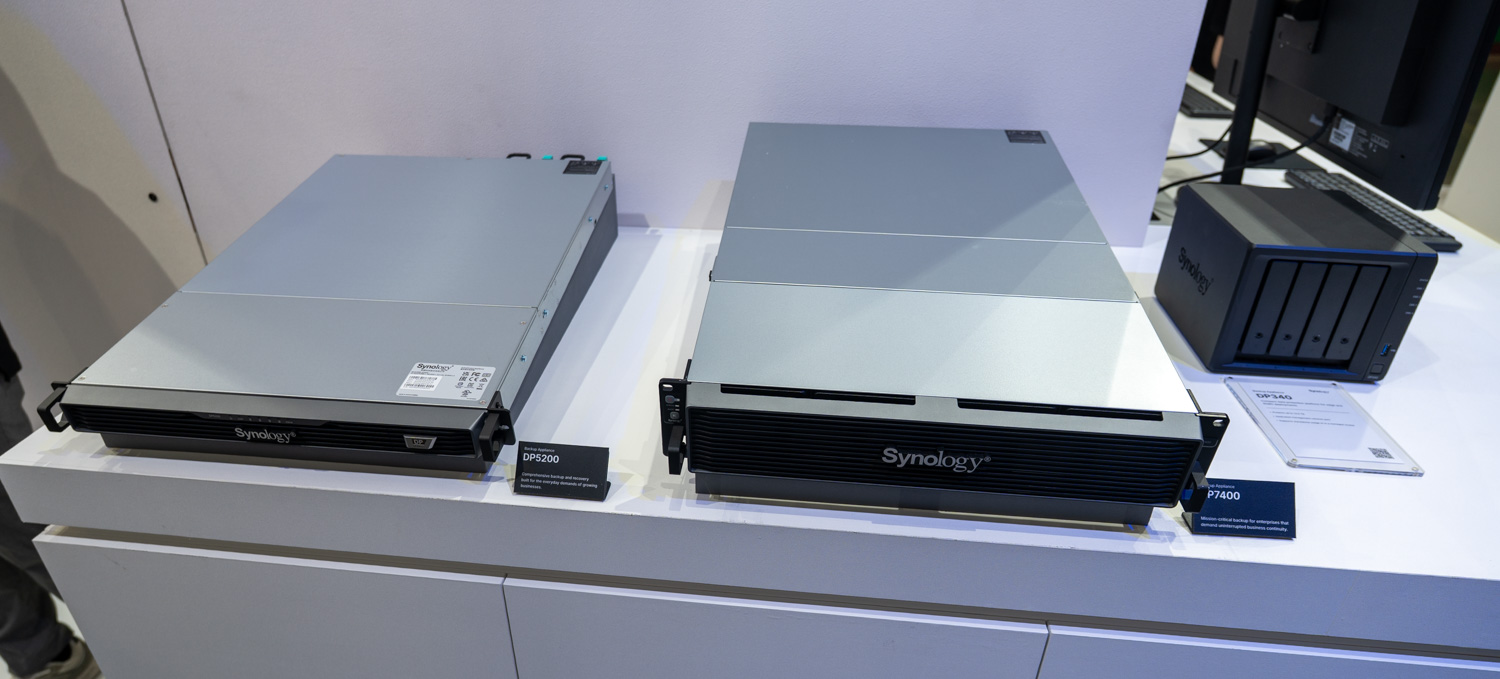
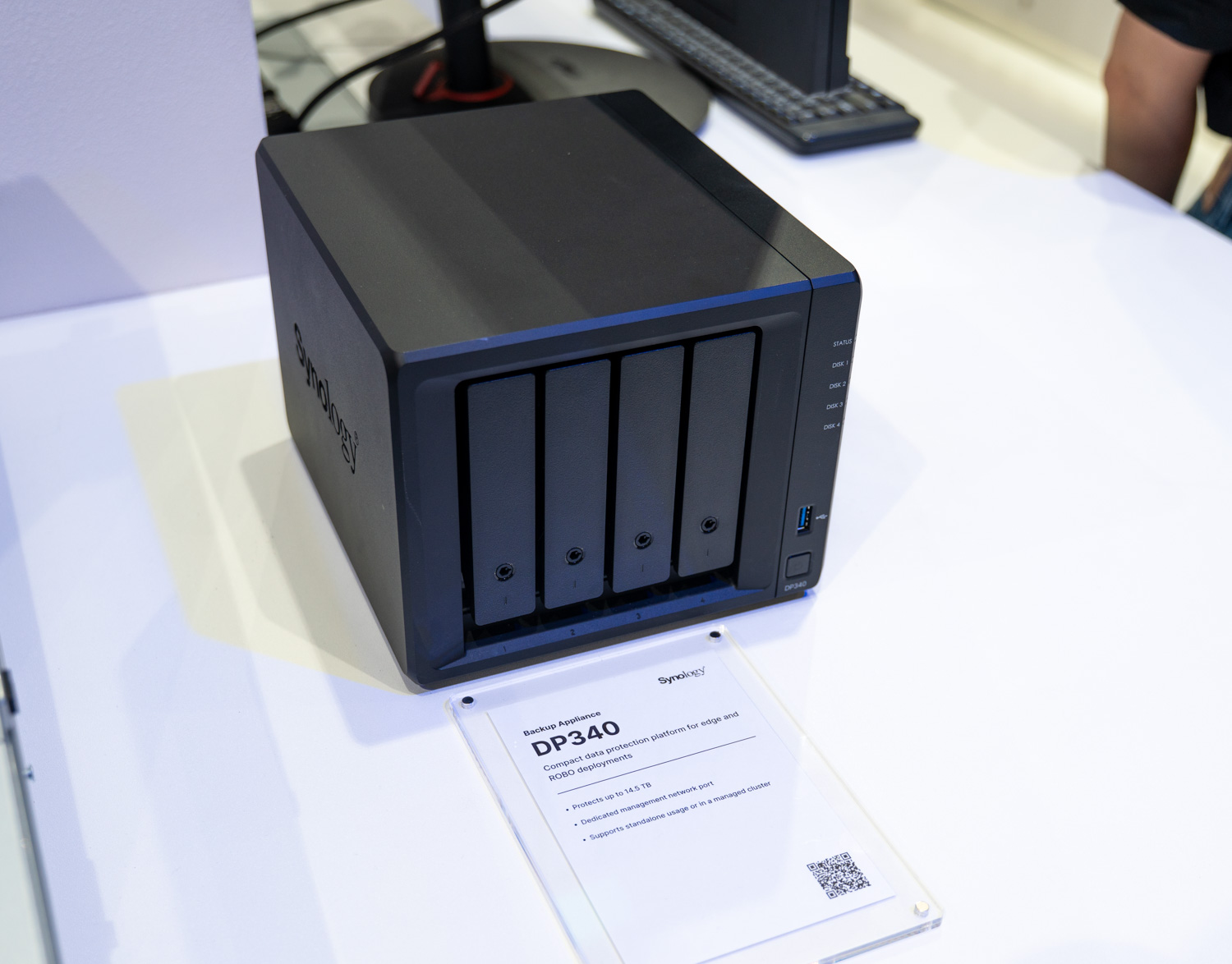
The update also introduces support for DP320 and DP340 appliances as management servers. This provides enterprises and managed service providers (MSPs) with additional deployment options, enabling centralized oversight of distributed backup environments without requiring larger management platforms.
| Specification | DP7400 | DP7200 |
|---|---|---|
| Rack | ||
| Suggested Backup Source* | 83.5 TB | 56 TB |
| Suggested Built-in Restored VM | 9* | 4* |
| Cluster Management Capability | Supports up to 2,500 servers or 300,000 workloads | Supports up to 2,500 servers or 300,000 workloads |
| Form Factor | 2U (RU) | 2U (RU) |
| CPU | AMD EPYC 7272 | AMD EPYC 7272 |
| Memory | 64 GB (Max. 512 GB) | 32 GB (Max. 512 GB) |
| Storage Configuration | 2 x 3840 GB 2.5″ SSD (RAID 1) 10 x 20 TB 3.5″ HDD (RAID 6 + 1 Spare) |
2 x 1920 GB 2.5″ SSD (RAID 1) 10 x 12 TB 3.5″ HDD (RAID 6 + 1 Spare) |
| Network Interface | 1 x 1GbE RJ-45 (Management) 2 x 10GbE RJ-45 (Data transfer) |
1 x 1GbE RJ-45 (Management) 2 x 10GbE RJ-45 (Data transfer) |
| Specification | DP340 | DP320 |
|---|---|---|
| Tower | ||
| Suggested Backup Source* | 14.5 TB | 5 TB |
| Suggested Built-in Restored VM | 2 | 1 |
| Cluster Management Capability | Supports up to 30 servers or 1,500 workloads | Supports up to 10 servers or 500 workloads |
| Form Factor | Desktop | Desktop |
| CPU | AMD Ryzen R1600 | AMD Ryzen R1600 |
| Memory | 16 GB | 8 GB |
| Storage Configuration | 2 x 400 GB M.2 SSD (RAID 1) 4 x 8 TB 3.5″ HDD (RAID 5) |
2 x 8 TB 3.5″ HDD (RAID 1) |
| Network Interface | 1 x 1GbE RJ-45 (Management) 1 x 10GbE RJ-45 (Data transfer) |
1 x 1GbE RJ-45 (Management) 1 x 1GbE RJ-45 (Data transfer) |
Expanded Platform Compatibility
APM 1.2 extends support for a broader range of operating systems, virtualization platforms, and database environments.
New platform support includes macOS 26, major Linux distributions, and Microsoft Hyper-V running on Windows Server 2025. Synology also added enhancements to protect critical database workloads, reflecting continued demand for broader workload coverage across hybrid and mixed infrastructure environments.
Enhanced 3-2-1-1-0 Data Protection Workflows
The release introduces improvements to backup copy management designed to strengthen adherence to the 3-2-1-1-0 data protection framework. New capabilities include retroactive copy enablement and extended retention options, allowing organizations to adjust protection policies while maintaining compliance with retention and recovery objectives.
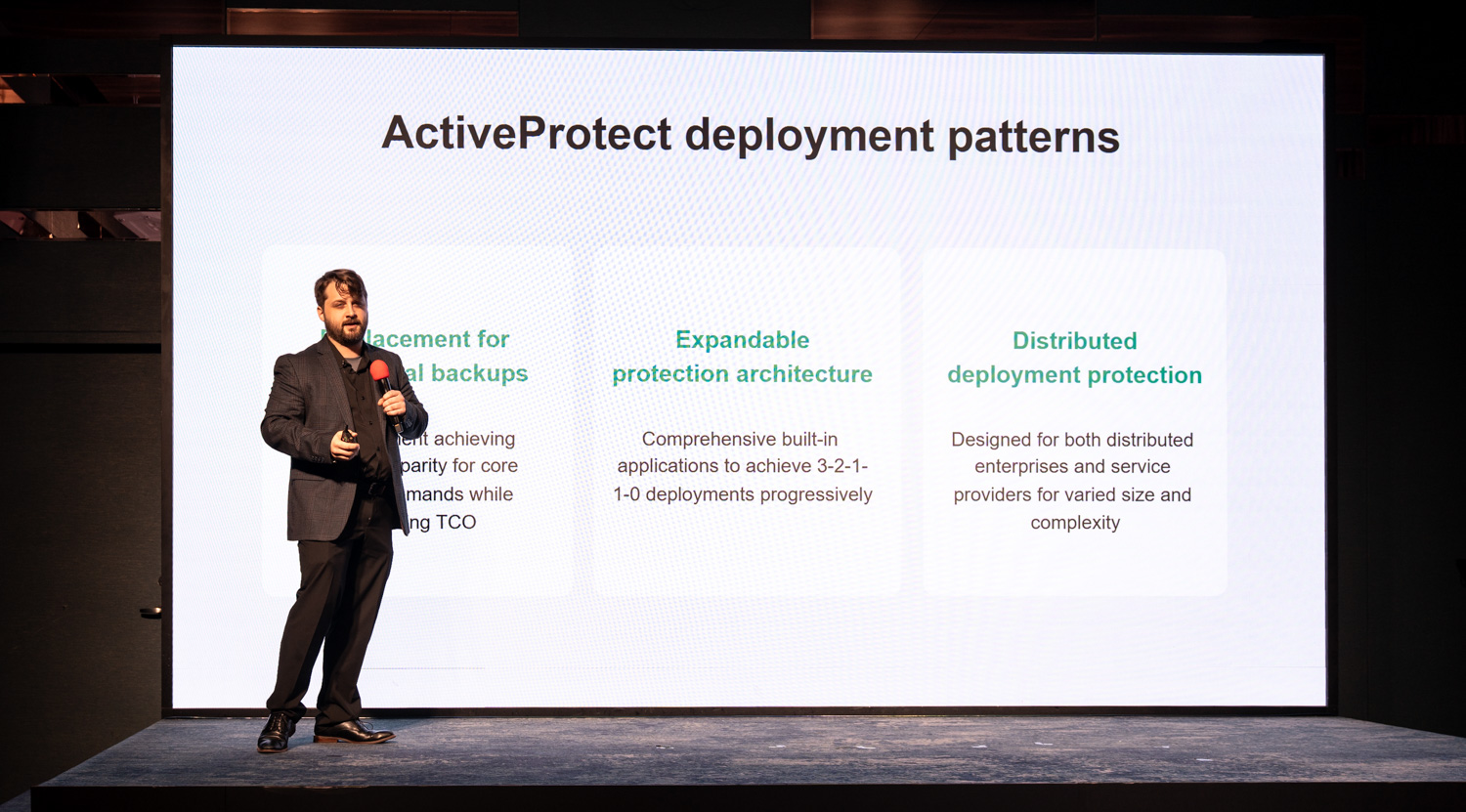
Administrators also gain real-time visibility into backup copy operations through enhanced progress tracking. The added monitoring capabilities help identify issues earlier and provide operational insight into backup replication and retention activities.
Synology Broadens ActiveProtect with APM 2.0
Synology also unveiled APM 2.0. This is a significant product expansion rather than a simple product update. APM 2.0 expands the scope of the ActiveProtect platform, positioning ActiveProtect Manager 2.0 as a broader backup and cyber resilience layer for hybrid infrastructure. According to Synology, APM 2.0 adds protection for AWS EC2, Azure VM, Proxmox, Nutanix AHV, and Google Workspace, along with cross-platform recovery and AI-powered anomaly and malware detection. Synology also paired the software update with a new DP5200 appliance, signaling that the ActiveProtect roadmap remains tightly coupled to dedicated hardware.
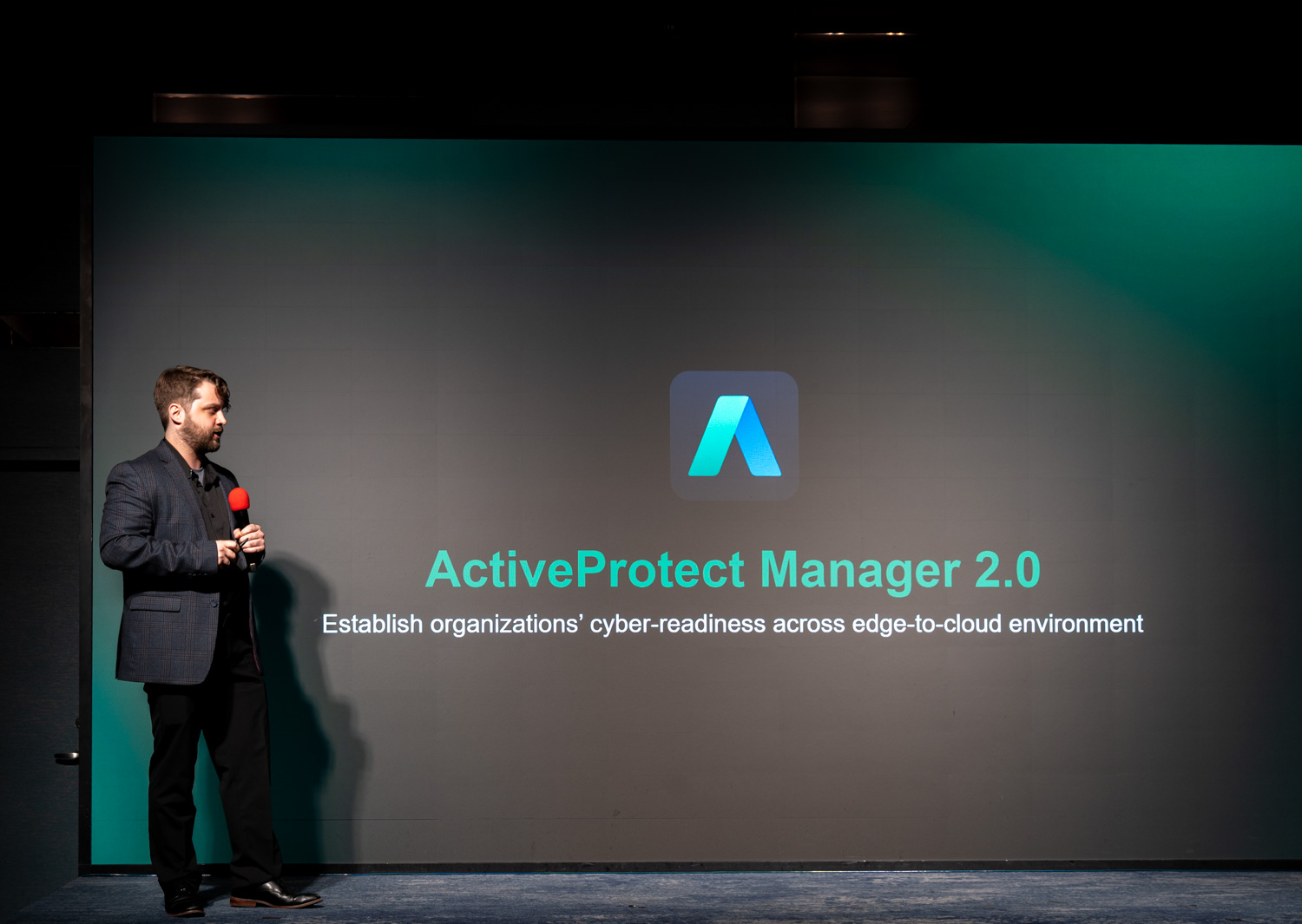
With this update, ActiveProtect moves beyond a narrower appliance-first backup story and toward hybrid protection. Support for cloud VMs, Google Workspace, and alternative virtualization stacks such as Proxmox and Nutanix AHV gives Synology a more relevant message for organizations that no longer want separate tools for branch infrastructure, core virtualization, SaaS data, and cloud workloads. APM 2.0 is Synology’s clearest effort yet to turn ActiveProtect into a centralized management and recovery plane rather than a point product.
Competition
Synology’s competitors, such as Veeam, Rubrik, and Cohesity, already frame backup as a cyber resilience platform, with broad workload coverage, ransomware posture, and centralized policy management. Synology is now aligning its messaging to that same set of requirements. However, Synology’s historical advantage has been simplicity, vertical integration, and appliance economics, not feature breadth or ecosystem depth at the very high end.
Synology appears more appliance-focused and integrated, appealing to midmarket buyers seeking a pre-configured stack. Veeam, on the other hand, benefits from broader platform familiarity, extensive channel reach, and a more mature, software-led approach across diverse environments. Compared to Rubrik and Cohesity, Synology likely competes on operational simplicity and lower costs. Still, those vendors are perceived as stronger in enterprise features like large-scale policy management, security workflows, and platform extensibility.
Not Just Another Protected Workload
The most important addition is not just another protected workload. It is the combination of hybrid workload support and cross-platform recovery. If Synology executes well, that could make ActiveProtect more attractive to distributed enterprises and upper-midmarket accounts with mixed estates that want a consolidated backup experience without adopting a larger, more complex platform stack.
Another notable point is the inclusion of AI-based anomaly and malware detection. That is now table stakes in backup marketing. However, it still matters strategically because buyers increasingly expect backup platforms to contribute to threat detection and clean recovery workflows, not just data retention. At this stage, Synology has announced the capability. Still, public technical details remain limited on how deep the analytics go, how alerts are operationalized, and how mature the recovery workflow is under real-world incident conditions.
APM 2.0 is a meaningful product expansion, not a cosmetic refresh. Synology is pushing ActiveProtect into more competitive territory by broadening workload coverage and strengthening its cyber-resilience positioning. For SMB, distributed enterprise, and cost-sensitive midmarket buyers, that could materially improve Synology’s standing. For larger enterprise deals, the key question will be execution: scale, policy depth, reporting, immutability options, and how well cross-platform recovery performs beyond launch messaging.
Next-Generation DSM Targets Enterprise AI Deployments
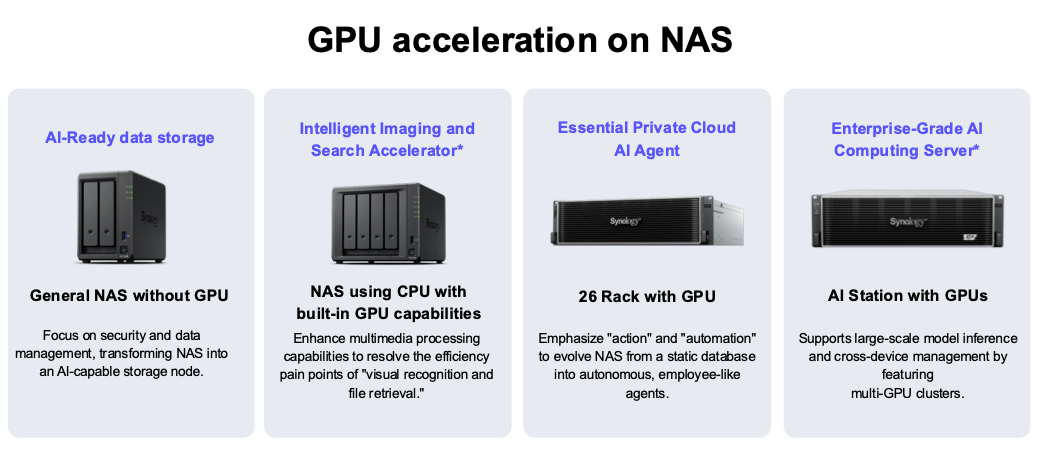
Synology previewed the next generation of DiskStation Manager (DSM), which introduces capabilities designed for AI-enabled infrastructure and large-scale enterprise deployments.
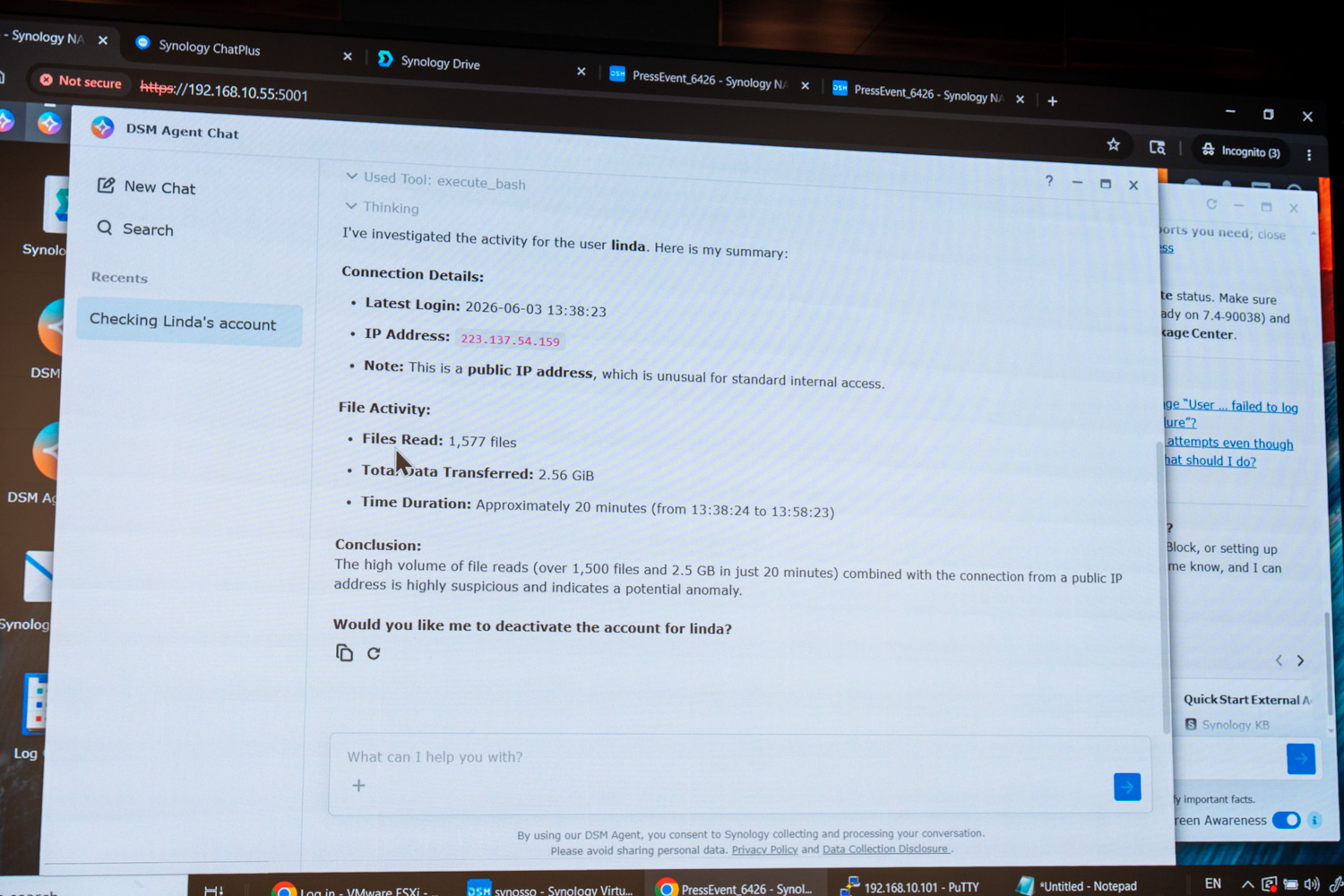
The updated platform supports GPU-equipped NAS systems and dedicated AI appliances, enabling organizations to run AI inference workloads on-premises while maintaining governance and control over sensitive data. Synology also introduced DSM Agent, a new orchestration layer intended to automate and coordinate intelligent workflows across the environment.
For larger deployments, Cluster Manager provides centralized administration across multiple Synology systems through a single management interface. The platform supports workload migration, quality-of-service controls, and centralized protection policies. Active Insight gains a Mass Deployment feature for provisioning systems across distributed locations. At the same time, an updated Log Center adds expanded observability and auditing capabilities aimed at security and compliance use cases.
Surveillance Portfolio Adds Access Control and AI Analytics
Synology expanded its surveillance ecosystem with new access control hardware, cameras, analytics platforms, and cloud monitoring services.
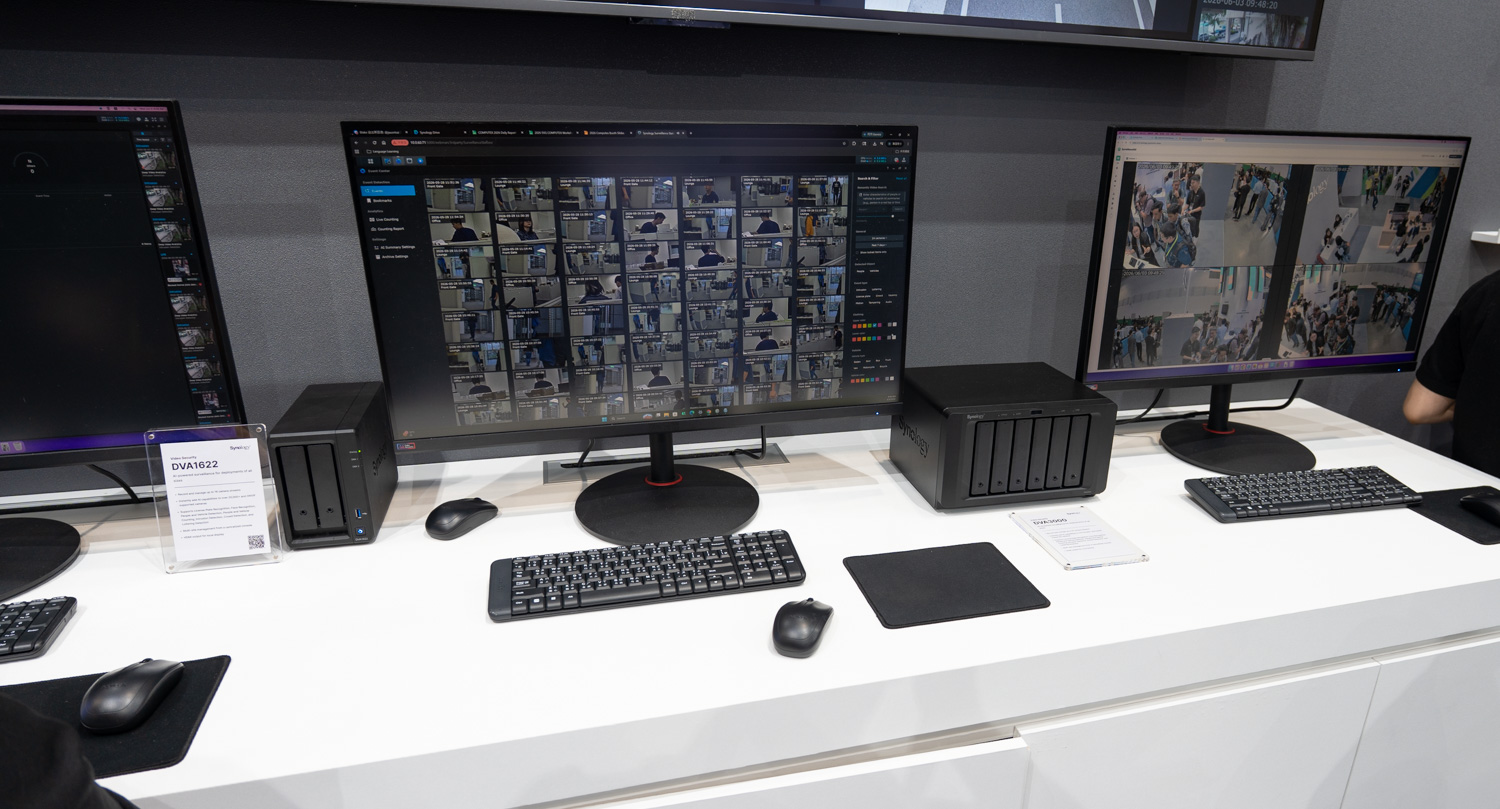
New products include the AC100 door controller, AR Series access readers, and DC Series dome cameras. The company also introduced updated Deep Video Analytics (DVA) appliances that leverage AI for semantic event search and re-identification path tracking, enabling faster investigation and analysis of surveillance footage.
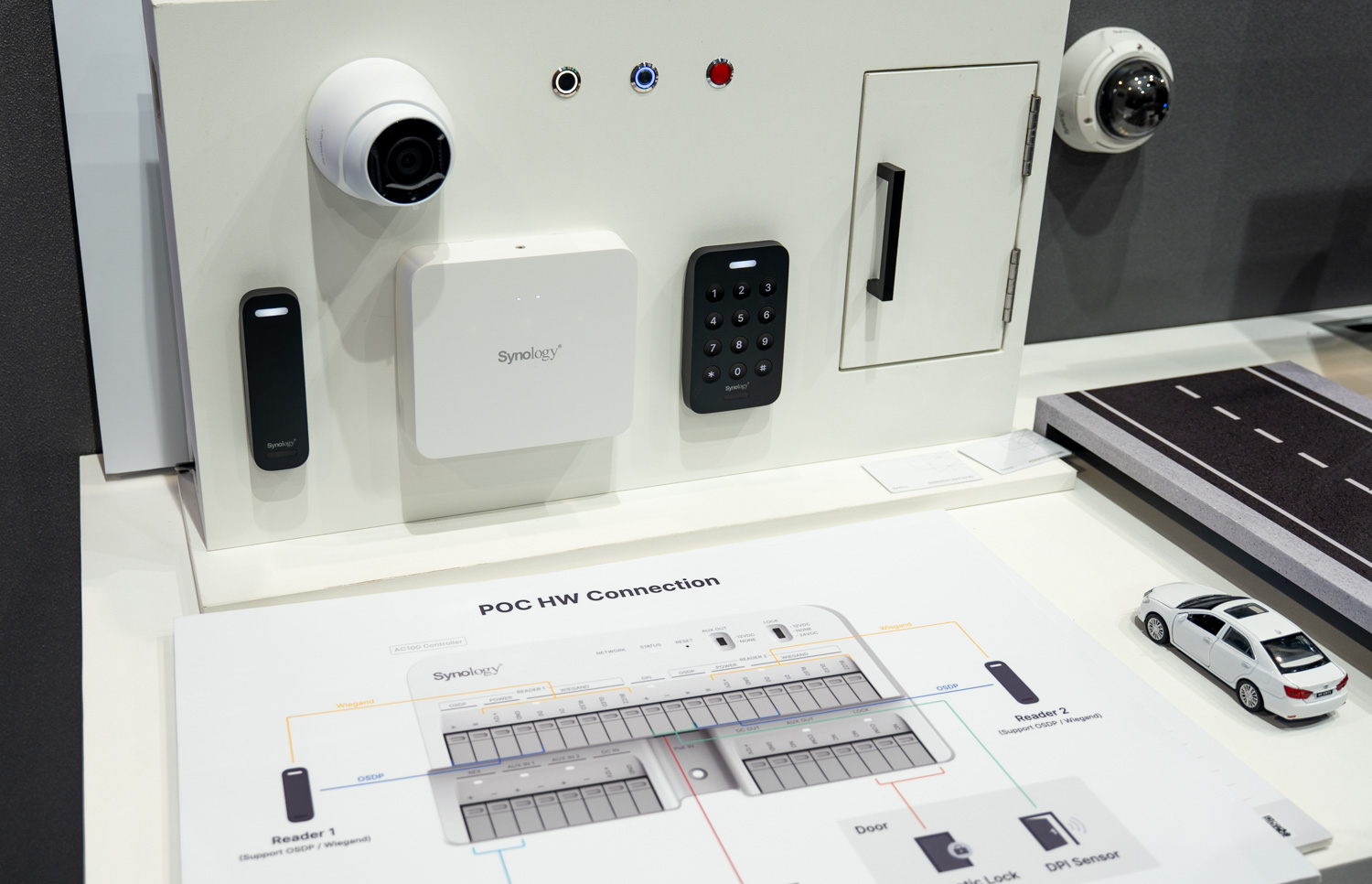
The surveillance portfolio is further complemented by Surveillance365, a video surveillance-as-a-service (VSaaS) platform that integrates with on-premises Surveillance Station deployments. The hybrid architecture provides centralized monitoring and management across remote and multi-site environments.
Synology Office Adds Collaboration Tools
Synology expanded its Office Suite with the introduction of ChatPlus and Meet, adding enterprise collaboration and communications capabilities to the platform.
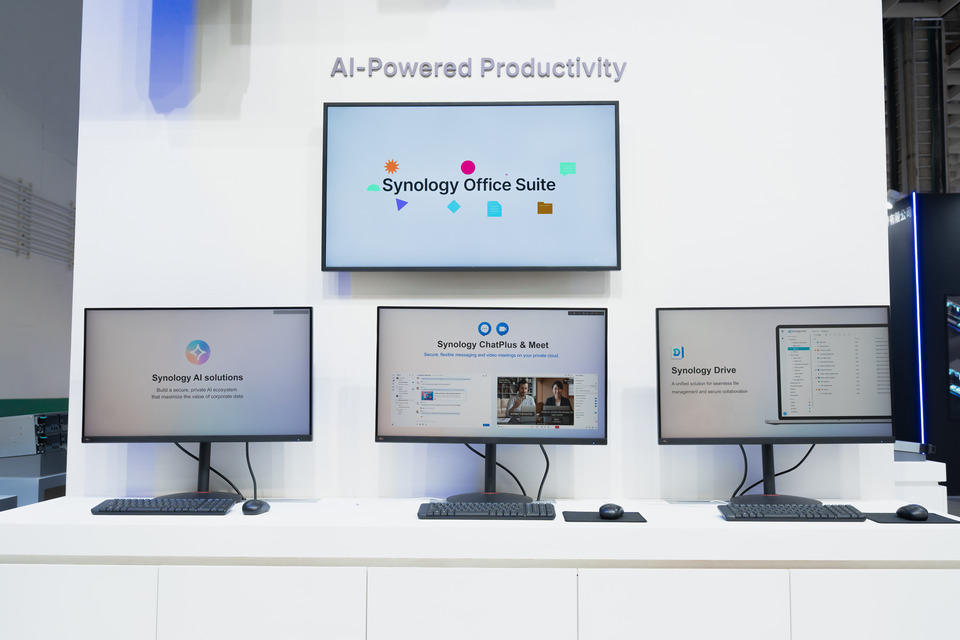
Both applications include administrative controls and permission management features designed for business environments. AI-powered transcription and translation capabilities are also integrated, while keeping data processing and storage under organizational control through on-premises deployment.
Bee Series Gains New Private Cloud Capabilities
For consumers and small office users, Synology expanded its Bee Series private cloud ecosystem with new BeeStation and BeeStation Plus offerings.
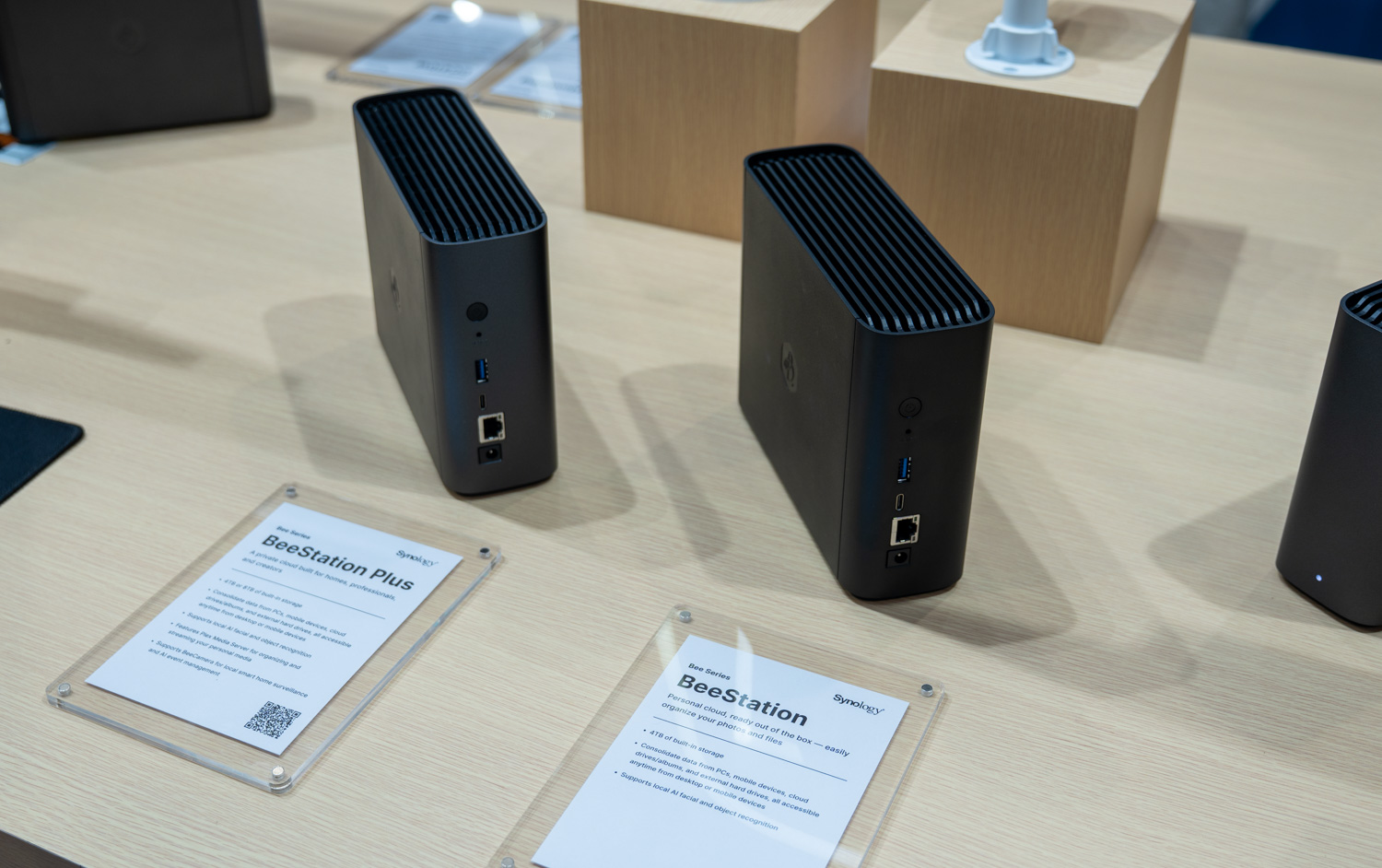
The company also introduced BeeCamera, which enables home monitoring through BeeStation Plus when paired with Synology cameras. In addition, Synology Deep Search adds AI-powered local search capabilities across content stored on Windows and macOS systems, allowing users to locate files and information while keeping data private and under local control.
The announcements collectively reflect Synology’s broader strategy of integrating AI capabilities across its product portfolio while maintaining an emphasis on on-premises deployment, data ownership, and centralized management.
Availability
ActiveProtect Manager 1.2 is available now as an update for existing ActiveProtect deployments, and Synology ActiveProtect appliances remain available globally through the company’s distributor and channel partner network. ActiveProtect Manager 2.0 and the new DP5200 appliance were showcased at COMPUTEX 2026 and are not yet generally available; Synology has positioned them as forthcoming additions to the ActiveProtect lineup rather than shipping products at announcement.


 Amazon